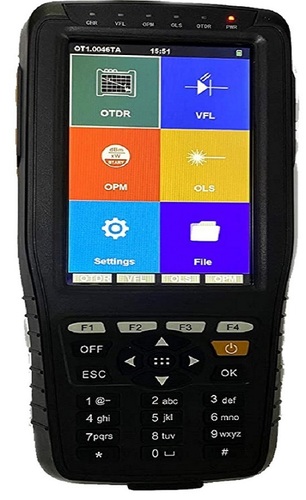
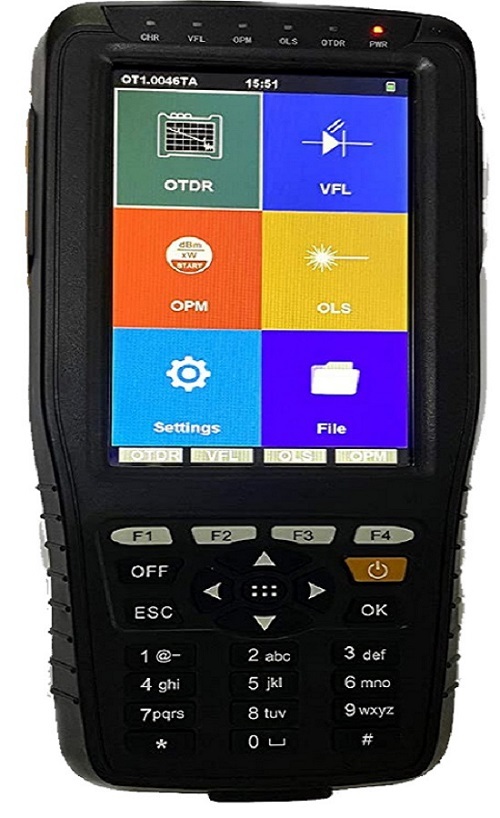
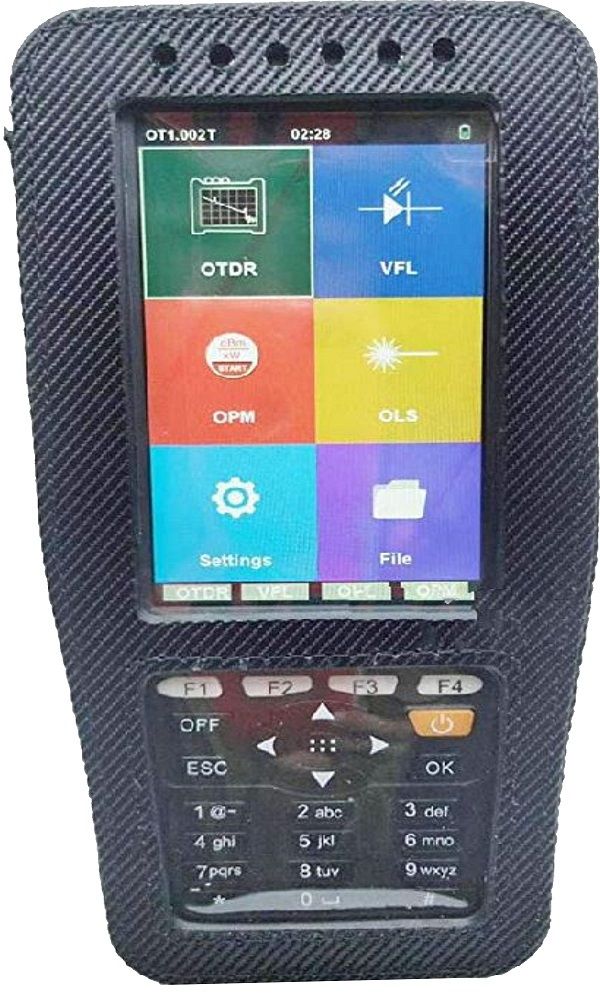
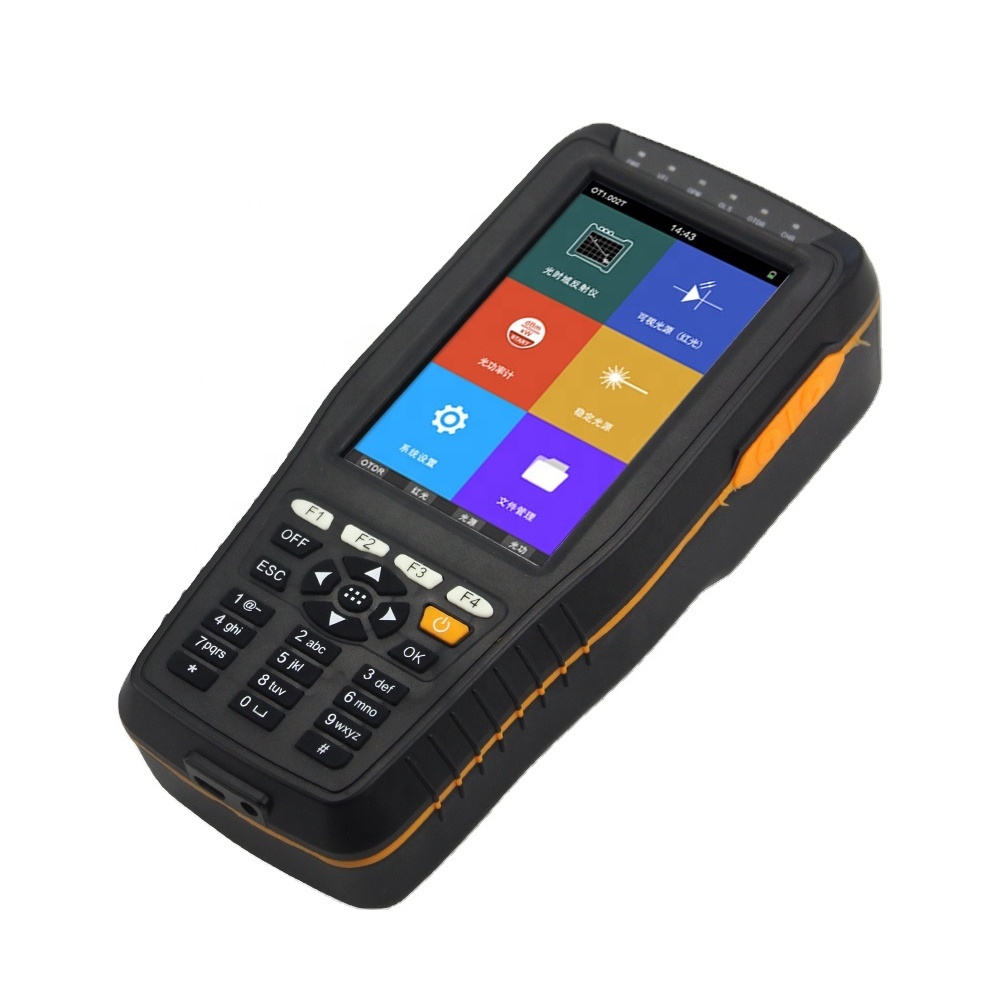
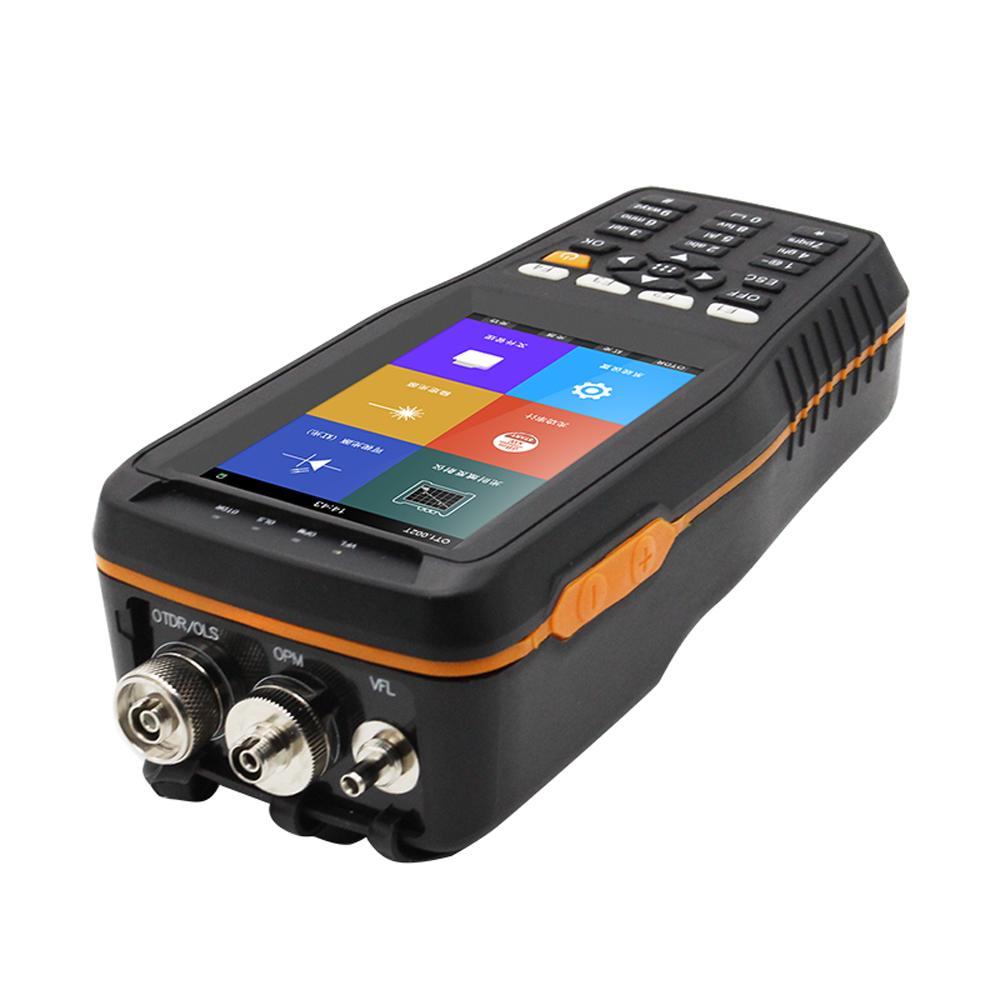
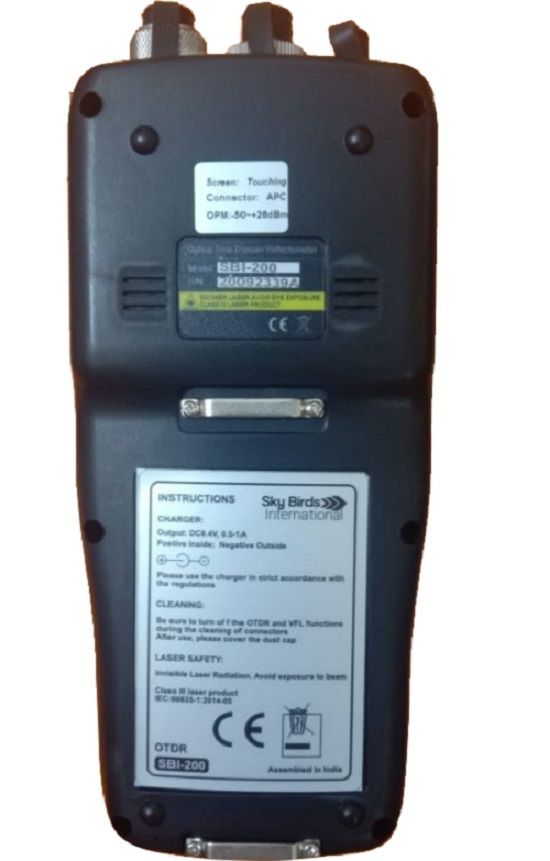
About SBI-200 Touch Screen Smart Handy OTDR
Main Features
Lightweight, portable, cost-effective
One Key Operation, Legible Test Data
Integrated with Visual Fault Locator system, it is easily to detect fault location of dead Zone
Use the rubber Key, good dustproof, waterproof, quakeproof ability, suitable for field maintenance work
Use big capacity battery, long working time, suitable for long time field working
Suitable for engineer construction and maintenance fault location of FTTx and access network
SpecificationsEffortless Fiber Link DiagnosticsThe SBI-200 OTDR streamlines fiber optic troubleshooting with its intuitive touchscreen and auto test feature. Users can quickly pinpoint faults, splice losses, and reflectance issues, ensuring precise network maintenance. The device measures up to 80 km (depending on module) and delivers results in the SOR standard format, facilitating seamless data export and analysis.
User-Friendly, Portable DesignDesigned for field use, this OTDR weighs only 400 grams and fits comfortably in hand. Its robust ABS plastic casing withstands demanding work conditions, while the capacitive 5-inch touch screen enables efficient navigation even with gloves. Portable and rechargeable, it provides over 8 hours of continuous operation for all-day use.
Versatile Connectivity and StorageWith USB Type-C and optional microSD storage, the SBI-200 makes saving, transferring, and sharing test results straightforward. The internal memory stores up to 10,000 results, while optional WiFi allows for wireless connectivity (if available). This flexibility integrates easily into existing workflows for manufacturers, suppliers, or traders in India.
FAQ's of SBI-200 Touch Screen Smart Handy OTDR:
Q: How does the auto test function on the SBI-200 OTDR simplify fiber optic testing?
A: The auto test function enables users to perform rapid, automated measurements with minimal setup. Simply connect the fiber and initiate the test, and the device identifies events, measures distances, and evaluates losses without manual parameter adjustments, saving valuable time during fieldwork.
Q: What wavelengths can the SBI-200 OTDR test, and why are these important?
A: The SBI-200 supports 1310nm and 1550nm wavelengths, which are standard for single-mode fiber testing. These wavelengths cover typical transmission windows, allowing the OTDR to detect faults and measure losses accurately across most commercial and industrial fiber networks.
Q: When should I use the integrated Visual Fault Locator (VFL) feature?
A: Use the optional integrated VFL when you need to visually locate breaks or bends in fiber optic cables over short distances. This feature emits visible laser light, making it easier to pinpoint faults quickly during installation or troubleshooting without conducting a full OTDR scan.
Q: Where can test results from the SBI-200 be stored and exported?
A: Test results can be saved to the device's large internal memory (up to 10,000 records) or exported via USB Type-C to a computer. With the optional microSD card slot, storage capacity increases up to 32GB, and results can be transferred for further analysis or reporting.
Q: What is the benefit of the device's event and attenuation dead zones?
A: With an event dead zone of 1.5m and attenuation dead zone of 8m, the SBI-200 precisely detects closely spaced faults or connectors that might otherwise overlap, providing detailed insight into complex or high-density fiber links.
Q: How long does the battery last, and what is the recommended power supply?
A: The SBI-200 is equipped with a lithium-ion battery offering over 8 hours of continuous operation. Charging is achieved with a DC 5V/2A adapter, ensuring reliable performance throughout a full workday in the field.

 Send Inquiry



 Send Inquiry

 Send Inquiry


